AI can draft a LinkedIn post in twelve seconds. It can also produce something so polished, so empty, and so interchangeable that audiences (and LinkedIn’s own filters) immediately smell the bot.
That’s the issue playing out right now in agencies and in-house. Teams celebrate the speed while the message gets thinner. The posts sound smart until you realize they could belong to anyone in any industry. Authenticity isn’t a vibe. It’s the only thing left that still earns attention and trust.
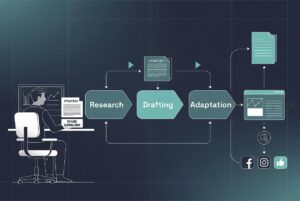
The difference isn’t whether you use AI. It’s whether anyone is actually operating the controls. A strategic communications professional knows how to treat the tool as a first draft, not a finished thought. They apply judgment, brand intent, and the most reasonable question: “Does this actually sound like us or just like the model’s average of everyone else?”
Most organizations still lack the basic guardrails. No clear rules on when AI can be used for external content. We’ve seen a number of clients, staff, and even executives offer up content that clearly had no review standard that protects the brand voice. No expectation that the human in the loop remains responsible for substance. The result is predictable: more volume, less distinction, and a slow erosion of credibility that no amount of “AI-powered efficiency” will reverse.
Speed without judgment is just noise with better grammar. The organizations and teams that treat AI as an accelerator while keeping strategic operators in charge of the final call will stand out for the simplest reason that they still sound like they are real and mean it.
Everyone else is optimizing for the algorithm’s least common denominator. And the algorithm is starting to notice.